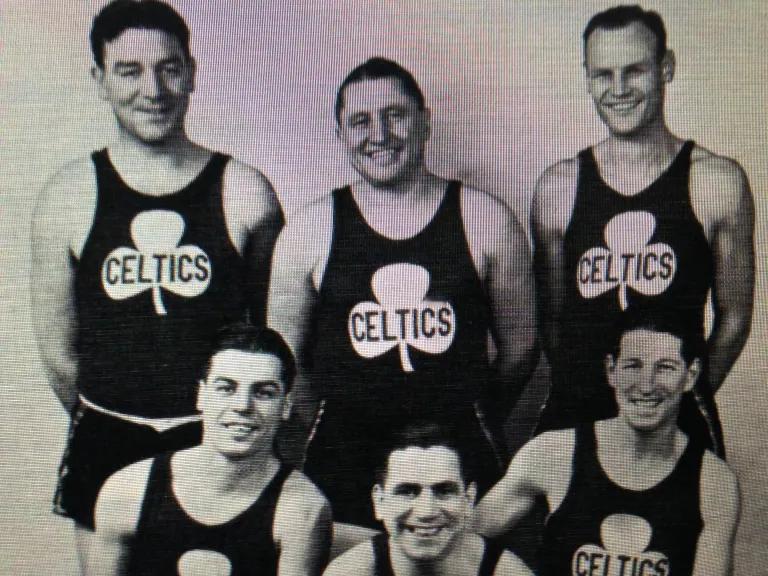
送葬者凯尔特人勇者牛爷爷1920五人小队讨伐血桶现代篮球都是软蛋因为没有人在你发边线球时把烟按到你腿上面1.凯尔特人队创业艰难,当时从业的联赛也艰难维生。有一回,他们的赞助人是位名叫多诺万(Donovan)的神秘绅士。他被威特(Witte)从某个地方找出来为俱乐部提供资金。多诺万只见过球员一次,仅仅一次。他解释说,“外边的生意”使他无法和球员们度过太长时间,他对篮球知之甚少,但他信任威特。大多数凯尔特人队员认为多诺万先生是个讨人喜欢的小个子,尽管他从未费心解释他的"外部生意"是什么。他们很快就发现了。一天晚上穿过第十大道时,一辆轿车从多诺万先生身边疾驰而过,传来很多砰砰声,但不属于排气管。多诺万先生被发现时浑身弹孔,已经死了。看来他的生意是酿造和销售啤酒,在禁酒令时代,这职业确实有利可图也危险。轿车里的绅士们是商业竞争对手。于是威特急忙四处寻找新赞助人——最好资金来源能保守一点。对凯尔特人队来说,享乐是家常便饭。他们的客场之旅不仅是商业冒险,也是愉快远足。某天晚上,在纽约州,哈德逊河,贝克曼(Beckman)在比赛结束后返回酒店,途径一家熟食店,门口堆着几箱牛奶,上面放着一大块冰。贝克搬起那块重达50磅的冰,费力把它拖进了酒店。 "寄存一下,"贝克曼一边告知夜班店员,一边把冰块滑过服务台的台面。店员没寄存冰块,把凯尔特人队赶出了酒店。三叶草队里找不到现代篮球的卫生设施。他们连续几周穿着同一套队服而不清洗,仅仅是因为他们从来没有时间。每个人把自己的装备放在一个小手提包里。每场比赛后,脏兮兮、大汗淋漓的队服就被塞进去,再也不见天日,呼吸不到新鲜空气,直到第二天晚上为下一场日程上的比赛从包里拿出来。最终会有人想到订购一套新的,旧的就被丢弃了。和棒球Orioles队一样,凯尔特人认为医生只为富人服务。他们对自己的一切都有家庭疗法,其中大部分由贝克曼设计,他骨子里一定有点相信靠信仰治愈疾病——或者说是巫医——的气质。拉普奇克(Lapchick)回忆起凯尔特人队打过一场比较粗暴的比赛,比赛中,他的手臂被严重抓伤。一天后,抓伤处感染了。贝克曼诊断、开处方、治疗。他把一条土耳其毛巾浸入开水,然后紧紧地裹上乔(就是上文的拉普奇克)的胳膊。接着他开始用毛巾擦掉乔胳膊上的结痂。最后一步是将一瓶私酿白兰地倒在裸露的伤口上。"明晚你就会没事的,孩子,"贝克曼轻松地说。毕竟,这不是他的胳膊。奇怪的是,拉普奇克确实能在下一场比赛中上场,尽管在贝克的"治疗"后他没怎么睡着。但这就是凯尔特人队,男人中的男人。篮球是他们的宗教,他们在陌生而遥远的地方设立祭坛。他们通过中西部和南部传播福音,与职业队、业余队或大学队比赛,并在赛后——若时间允许——举办讲座。他们名声如此煊赫,以至于当凯尔特人队来到某地,高中教练会派他们的球队跨越150英里去看凯尔特人队比赛。2.尽管凯尔特人队走遍全国,所有当事人和我聊起谈起故事时都一致认为,他们面对过最粗野的球场是布鲁克林的 Prospect Hall。它被来访的篮球运动员和裁判们"亲切"称为"血桶"。"连那里的球迷小孩都很厉害,"Dick Meehan,一位篮球早期真正伟大的裁判说,"我记得有一天晚上去那里执哨。我拿着手提包进大厅,一个小孩走过来问我,'先生,让我帮你拿包吧,这样我就能进去看比赛了。'""我告诉他可以拿我的包。然后他问我是不是为主队打球。我告诉他不是,他看起来有点踌躇。'那是为客队打球?'他问。"我告诉他也不是,小孩眼里掠过了然。他把包放在地上,慢慢从我身边挪开。 '那你肯定是裁判了,'他说。'在你开始之前,我敢用二赔一赌你吹得很烂!' Prospect Hall 的小孩球迷都这样。你可以想象成年球迷是什么德行!"Prospect Hall 过去是南布鲁克林的一个舞厅,现在也是。它曾容纳过一些伟大的球员——Red Cooney, Joe Brennan, Swede Grimstead, Harry Knoblock, Red Conaty, Willie Scril,还有许多其他人。凯尔特人队在那里比赛时总是爆满。赛前、赛后和中场休息时都安排跳舞。"我过去常纳闷他们怎么能把那么多人塞进那个地方,"Dutch Dehnert评论说,"仿佛人都挂在房梁上。房梁上的人觉得在你罚球时朝你扔瓶子不算什么大事。这已经够糟糕了,但坐在边线上的家伙会在你沿球场跑动时伸腿绊你。有一次,我正在发界外球,一个家伙把点着的香烟按在我腿后面。他们真是恐怖。"——《经典凯尔特人》(指1920年那支,有机会我会写一篇总结)*鉴于本人水平有限,依赖个人习惯和语感,且人名无法仔细考据,附英文原文如下。若要严肃引用,请自行研读和查证,只做故事分享。1.The beginnings of the Celtics were rough. The leagues in which they played were rough. Once, their backer was a mysterious gentleman named Donovan. He had been unearthed somewhere by Witte to bankroll the club. Donovan met the players once and once only. He explained that the pressure of his “outside business” would prevent him from spending much time with them, that he knew little about basketball, but that he had confidence in Witte. Most of the Celtics thought that Mr. Donovan was an engaging little chap, even though he didn’t bother to explain what his “outside business” was. They were soon to find out. Crossing Tenth Avenue one night, a sedan whizzed by Mr. Donovan, and there was a lot of popping which didn’t come from the exhaust. Mr. Donovan was picked up full of lead and very dead. It seems he brewed and sold beer, a profession both profitable and precarious in those Volstead days.2.Although the Celtics traveled the country, all that I talked to about this story agreed unanimously that the roughest court they ever played on was Prospect Hall in Brooklyn. It was known, and not with affection, to visiting basketball players and officials as “The Bucket of Blood.”“Even the kids among the rooters were tough,” relates Dick Meehan, another of the truly great officials of basketball’s early days. “I remember reporting there to work as a referee one night. As I’m walking into the hall with my handgrip, a kid comes up to me and asks, ‘Let me carry your bag, so I can get in to see the game, mister.’“I told him he could carry my bag. Then he asked me if I was playing with the Visitations, the home team. I told him I wasn’t, and then he looked a little hesitant. ‘Playing with the visitors?’ he asked.“I told him I wasn’t, and a great light dawned in the kid’s eyes. He put the bag down on the ground and edged away from me. ‘You must be the referee then,’ he said. ‘Before you even start, I’ll bet two to one that you’re lousy.’ That’s the way the kid fans were at Prospect Hall. You can imagine what the grown-up rooters were like!”Prospect Hall was, and still is, a dance hall in South Brooklyn. It has housed some great players in its day—Red Cooney, Joe Brennan, Swede Grimstead, Harry Knoblock, Red Conaty, Willie Scrill, and many others. It was always packed when the Celtics played there. There was dancing before and after the game and between the halves.“I used to wonder how they could get so many people into the place,” remarked Dutch Dehnert. “It seemed as though they were hanging from the rafters. And the guys in the rafters thought nothing of shying a bottle at you when you were trying to shoot a foul. That was bad enough, but the fellows sitting on the sidelines would trip you up when you were going down the court. Once a fellow stuck a lighted cigarette into the back of my legs as I was trying to pass a ball in from out of bounds. They were holy terrors.”